


PRESS RELEASES
September 28, 2026 / VIEW
September 25, 2026 / VIEW
September 4, 2026 / VIEW
August 21, 2026 / VIEW
August 13, 2026 / VIEW
Artist Notes
Returning To Myself / VIEW
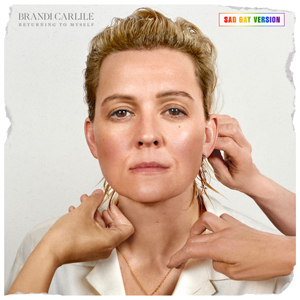
album artwork, Returning To Myself (Sad Gay Version) /
click for hi-res version
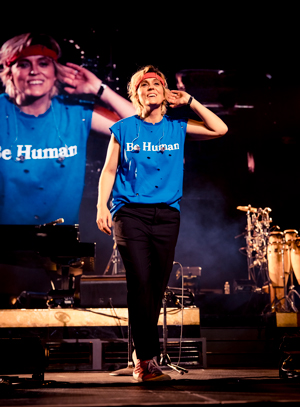
photo credit: Skyler Barberio / click for hi-res version

photo credit: Collier Schorr / click for hi-res version
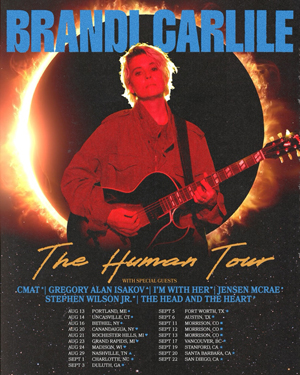

photo credit: Skyler Barberio / click for hi-res version

photo credit: Skyler Barberio / click for hi-res version

press credit: Phill McDonald / click for hi-res version

album artwork, photo credit: Collier Schorr / click for hi-res version
BRANDI CARLILE
RETURNING TO MYSELF
Release date: Oct. 24
Late one night in October 2024, Brandi Carlile wrote a poem.
She was exhausted and melancholy, and truth be told, a little hungover. It was an emotional mélange that mingled the joy and sadness she was feeling in the wake of letting go. Whether it was of a streak of unimaginable creative collaborations, of climbing to the highest personal and professional peaks of her life or years and years of hard work, she felt herself exhaling.
The poem, called “Returning To Myself,” unwittingly opened a door to a novel musical path for the acclaimed singer-songwriter-producer. Twenty years on from her self-titled debut album, Carlile was having a new vision.
In the four years since the release of her Grammy-winning 2021 album In These Silent Days, Carlile has worked in the service of amplifying other voices and visions. In that arena, the Washington native has been indefatigable.
As a producer, she worked with Lucius on their luminous 2022 album, Second Nature, and, with her co-producer Shooter Jennings, she reunited with Tanya Tucker for 2023’s Sweet Western Sound—a follow up to their Grammy-winning work on the country icon’s While I’m Livin’. Brandy Clark entrusted her self-titled 2023 album to Carlile’s production instincts and the pair won a Grammy for their tender duet “Dear Insecurity.” Earlier this year, Carlile released Who Believes in Angels? a collaborative album with longtime musical hero and dear friend Elton John, produced by Andrew Watt. (The trio, along with legendary John co-writer Bernie Taupin, were even nominated for an Academy Award for the song “Never Too Late.”)
Somehow, amidst the execution of all these creative endeavors, TV and live appearances, and her philanthropic work with her Looking Out Foundation, Carlile also oversaw four more sun-and-tequila-soaked installments of Girls Just Wanna Weekend, the ecstatic annual four-day festival in Mexico, hosting dozens of female artists from Janelle Monae to Shania Twain.
Crucially, during this entire time she also spearheaded the group of people, including her ride-or-die bandmates Phil and Tim Hanseroth, shepherding Joni Mitchell back into the spotlight. Mitchell’s surprise performance at the 2022 Newport Folk Festival led to a Grammy-winning live album and a series of “Joni Jams” concluding with two triumphant shows at the Hollywood Bowl in October 2024.
But, in that moment, she felt pulled inward. The time had come for Carlile to shrug off her ringmaster uniform and surrender to the hushed room of her poetry. The resulting album, born of and named after that song, “Returning To Myself,” overflows with freshness and vulnerability.
The album was co-produced by Carlile and Andrew Watt at Henson Studios in Hollywood, Carlile and Aaron Dessner at his Long Pond studio in the Hudson Valley—and in a few instances, both men and Carlile together. And in the case of the pulsating “Human,” all three were joined in the studio by Justin Vernon, who offered invaluable musical guidance and contributed instrumental work throughout the album and vocals on “A War With Time.”
The ten tracks economically span oceans of emotion and geography taking Carlile from her own formative years to contemplating the future lives of her children as well as the unceasing maelstrom that is the world at large.
While the contours of Carlile’s mighty and unmistakable voice remain legible whether she is engaging in murmurs or shouts, feathery acoustic ambles or urgent arena rockers, she stretches and sonically shapes her instrument in new ways. There are stunning backing vocals and inventive arrangements (including a stacked choir of Brandis on “A Woman Oversees”) and a sublime entanglement with Vernon (“A War with Time”).
Musically, with the help of familiar allies in the Hanseroth twins, SistaStrings (Monique and Chauntee Ross), drummers Matt Chamberlain and Chad Smith, keyboardist Josh Klinghoffer, and newer friends Watt, Dessner and Vernon, Carlile both rocks harder—on the furious, full-tilt “Church & State”—and delves deeper into a moody quiet—with the pastoral beauty of “Anniversary.”
That night Carlile thought she was at the end of something, but she was really at the beginning.
It’s been four years since you released an album of your own. Is that part of the reason you named this one after the first song, Returning To Myself?
Yes. But I didn’t set out with the intention of doing that. I tend to realize big things about myself in retrospect. It was a poem that I wrote the day after the final “Joni Jam” at the Hollywood Bowl.
The next morning, I got on a plane hung over and flew to Upstate New York to meet Aaron Dessner. I wasn’t sure what was going to happen, but it was with the intention of maybe writing a couple of songs. I didn’t know if they were for him or for me or for somebody else. I was looking at that as the end of a work trip, not the beginning of my next album.
But by the time I landed, I was very emotional. I had this funny, deep grief and gratitude and all these big feelings just stuck in my throat, because I knew deep down that that was the end of the Joni journey. I just couldn’t bear the thought of not sitting next to her again and listening to her sing “Both Sides Now” on stage. I was just really feeling unstable about it.
I got there and Aaron and I talked, and he gave me a few pieces of music and then he left me alone in his barn. I went upstairs and climbed in bed and wrote the lyrics to “Returning to Myself” all by myself—with somebody I didn’t even know, in the middle of nowhere.
That became the ethos of the album. I was like, “I’m alone. The twins aren’t here. My kids aren’t here. My wife is not here. Joni is not here. Elton is not here. None of the other artists that I love to sit on the phone with are here. It’s just me. What’s left?”
Ultimately, you decided to call in not just Dessner, but Andrew Watt and Justin Vernon as co-producers and to record in multiple places. How did that happen?
My first instinct was to go in with Watt, who produced Who Believes in Angels?, because of the brother-sister relationship that we have developed. We didn’t even know if musically we agreed on everything yet. We just knew that we liked being together all day.
But then I went out and I met Aaron. I learned that when you write with Aaron, he’s so visionary when he makes these songs that they’re more like completed recordings that you can sing on and then you can add and work with the clay.
I just had to figure out a way to get those two guys to meet and agree to work together. And they did! It was so generous of these two really special people to do that for me and my work because I don’t think they are people who would normally find each other.
It was a very cool meeting of the minds that happened and I think they should work together again. Aaron has an elevated level of taste and sensitivity and when met with Andrew’s audacity, bravery, and chaos it’s an amazing combination.
You also stepped outside of your previous norms by not having songs written prior to recording.
Yeah, I just had poems and thoughts and wound up creating this album based on a vision, which I had never done before.
The musicians were there while we were working it out. I never experienced such alchemy in the studio before, either as a producer or the primary artist.
There was just constant thinking, rethinking, experimenting, failing, succeeding, and having to be open to new people coming onto the scene.
Was there any particular inspiration for the vision?
One thing that came to mind early on was Emmylou Harris’ groundbreaking album Wrecking Ball. I’ve loved that album my whole life and referenced it musically in the studio more times than I can count, but I never contemplated it conceptually.
I don’t know if Daniel Lanois or Emmy would echo my take on it, but I see it as a defining moment for Emmy because of where she was in her career and life, and specifically how the album sounded against the landscape it emerged into.
Emmy was already deeply respected and known for being a great singer and songwriter but also notably for being a frequent collaborator. Her voice felt like it was everywhere but maybe not the rest of her…like you were hearing her on lots of stuff but maybe not her whole spirit.
The thing that Emmy and Daniel Lanois proved with Wrecking Ball was that you can wrap any kind of sonic world around Emmylou, be it ethereal or roots based, and it will still be Emmylou because her sense of self is so strong.
Wrecking Ball captured Emmylou’s whole spirit and it challenged the listener to rethink who she really was as an artist. A lot of this is because of Lanois’ playing and production. The result is that Emmy comes through loud and clear. The thing that stands out in anyone’s memory about that album though isn’t production, even though it’s revolutionary. The through line is Emmy’s voice steady as a freight train.
I wanted to make something that was undeniably and willfully me. It’s amazing how many people it takes to do that sometimes! But that’s kind of the point. it took many souls to make Wrecking Ball but they were coming from a supportive mindset.
Sometimes the hardest thing to do is to be carried and still end up on your own two feet.
The song, “Human,” is one of the most buoyant on the album and one of the most searing as you explore the need to stay in touch with your humanity in the face of the emotional exhaustion of living in this world. How did he add to the process?
We had recorded it and re-recorded it and done the best that we could. It was Andrew’s baby. Andrew loves this song. But something was just not quite right.
Justin came out to the studio as a producer and collaborator on that song and we rebuilt it from the ground up. When we got it to a place where everybody was like, “Oh, this is really special. It’s calibrated,” everybody came back in, and it became a big collaboration with all of us.
Lyrically, I wrote that song on November 4th. I was just torturing myself, dying inside not knowing the outcome of the election. But, like the song says, I thought, “We’re fucking human. We’re here for just this blink of an eye. We have to find a way to be happy regardless.” I don’t think that that’s neoliberal or centrist. I just think it’s human.
He also proved integral to “A War With Time” which has such a sense of longing.
The whole record, aside from “Returning to Myself,” is about fighting transitions. “A War with Time” I’m using a metaphor that’s specific to me, about knowing that someone needs to go, but wanting them to stay. In my case, I’m using my first trip to New York City as an example of needing to go somewhere really scary and take a big risk. And it probably really scared my parents.
But that trip to New York was me experiencing aloneness for the first time and the song is about knowing that I’ve got kids that are going to need to experience it too and just really not wanting them to, but also really wanting them to.
Keyboards in general—pianos, synths, mellotrons even—hold a place of prominence. What was the driving force behind that shift?
I just really wanted this album to have an otherworldly palette that’s different from what I’ve done in the past, but that is really in my heart. I had some of my deepest, most adolescent, ‘90s musical influences just kind of haunting me throughout this project. And I fucking love keyboards and I love ether. I like reverb and delays.
Watt has keyboards all over the studio including David Bowie’s Moog synthesizer—his actual synthesizer! We couldn’t not touch those toys.
You’re also doing new things vocally, from the harder edged rock stuff to ethereal, intimate moments like “Anniversary” and less of your signature powerful belt. How did you approach your choices?
I wasn’t trying to avoid my powerful register. I was just feeling a bit fragile and hesitant about being forced into a major transition in my life, and just not feeling like standing there in a sparkly suit and pumping my fist at the sky and hitting the big note. I just didn’t feel like that artist on this record.
The vocal on “Anniversary,” wasn’t even a conscious choice. I was just genuinely sad and in pain and embarrassed and shy that I had to sing that in front of somebody else. Instead of trying to get used to singing it until I felt strong, I just sang it shy twice. Like Elliot Smith did. He was an inside-out, really vulnerable person and that’s just how I felt on this album a lot. It borders on an overshare.
Going back to the title track, the song interrogates the myth of the lone wolf vs the comfort of the pack and definitely confronts how lonely that can feel.
Really lonely and it’s also kind of mad that people overvalue this aloneness, that that’s how you’re supposed to learn to be yourself.
People fight big transitions throughout their entire life. No one wants to be born. We come out screaming. And no one wants to die. We fight it. So I’m just being honest about the need to return to oneself, but also deeply not wanting to.
I think people are going to hear that song in different ways. Some are going to hear it as a call to return to themselves. Some are going to hear it as a justification not to. And I love that about it because it is a deeply conflicting feeling. There is no a-ha moment in that song. It’s just a contemplation of, “Is enlightenment aloneness or is enlightenment learning togetherness and sacrificial love?”
For Brandi Carlile, please contact Asha Goodman or Carla Sacks
at Sacks & Co.
For Interscope Records/Lost Highway, please contact Ambrosia Healy
or Christine Wolff.